Insulin Resistance and Type 2 Diabetes
By: André Bettinson
Diabetes, or excess glucose whether it be in the blood or urine is one of the most prevalent diseases in the United States; so much so that the month November is observed as American Diabetes Month. (American Diabetes Association, 2017) Diabetes is precisely the problem of too much glucose in the body. The common symptoms are hunger, fatigue, excessive urination among many others. Diabetes can lead to kidney failure, blindness, nerve damage, and blood vessel hardening/narrowing. As many know, the blood vessel damage alone can lead to atherosclerosis or coronary heart disease. Diabetes is a serious disease, and should not be taken lightly. Diabetes is so common nowadays people have heard that there are different types, but what are the differences?
The main difference between type 1 diabetes and type 2 diabetes are essentially polar opposites. Type 1 diabetes is caused by a lack of insulin. Type 2 diabetes is caused by high insulin levels. You might be wondering what insulin’s function is because the paragraph above stated that the problem of diabetes has to do with excessive glucose, not insulin. Insulin is a hormone that is secreted by our pancreas in response to certain foods that we eat. In simple terms, insulin is what drives glucose into the cells to be utilized. Simultaneously, insulin is a storage hormone; it utilizes what is in our blood for energy to be used readily as well as what should be stored away for use later. Type 1 diabetes with the cause being too little insulin means that we have an excess amount of glucose elevated in our body due to our key hormone not being secreted. The reason for type 1 is linked to what is called our pancreas’ beta-cells which produce our body’s insulin, these beta-cells are destroyed by our very own immune system. There are many different speculations on what might cause this immune system response, but in this article I will be focusing on the preventable and curable type 2 diabetes.
Insulin: Too Little, Too Much
Now that we know that the root cause of diabetes is not simply elevated glucose levels in the body, but it is insulin whether in scarcity or excess. But why is it that type 2 diabetes even occurs, if the problem is that your body produces and responds with a lot of insulin? Shouldn’t your body have that much more efficiency in using glucose? When it comes to dealing with reality and nature as a whole there is always a balance that must be achieved; a balance that is not always as expected, or even giving to consideration of our well-being.
Our body has a system that helps cope with certain things going on, more specifically in terms of tolerance, or resistance. Many people might know this from learning of the biological mechanisms of addiction. Whether the person’s drug of choice is narcotics, opiates, or even alcohol, our body will get used to the intake or consequences of using these substances. Our body builds a tolerance to the substance. It now takes much more of the substance to achieve the same high or comparable euphoric result. The addict has de-sensitized their body to the substance or stimulus. The addict’s body has been primed to be resistant to the substance’s effect.
When we eat certain foods, our body will illicit an insulin response to take on the expected or prevalent glucose sources being digested. With type 2 diabetes and the root cause of having too much insulin is precisely an issue of resistance. The type 2 diabetic has too much insulin because the insulin receptors do not grant the pathway for the glucose to enter the cells as readily at the receptor sites. The end result is not as readily achieved with this built-up resistance. Picture a bunch of localized receptor sites as the holes in the drain of your bathroom sink. Now think of some of those holes of the drain being a much smaller diameter, or closed altogether. This is essentially what resistance, or desensitization is boiled down to. If we have a bunch of dirt or grains of sand that need to be driven into the drain of the sink, then we’ll probably think about running some water. Water in this analogy will be our insulin. If we have nice clean, sensitive and open holes on the drain cover flush out our sand, then things should run rather smooth. If our drain cover is dirty, clogged with hair, has calcium buildup or is constricted to signify resistance; then our sink will remain clogged for some time. It’s going to take some time with the faucet turned off and a reduced intake of dirt to drain this mess.
In treatment of type 2 diabetes, these days most doctors explain the condition as a progressive disease. This is no wonder to me because the treatment methods that doctors give involve giving the patient more insulin. The exogenous units of insulin create more force to jam glucose into the cells. It’s like giving an addict a more potent or higher dosage of their drug of choice, they are more likely to reach the effect. The same goes for the increase in insulin, however this is very temporary because the doctors are treating the symptom on the surface, the glucose levels. However, they are making the tolerance or resistance worse. They are furthering the desensitization and disease. They are furthering the backup, they are fighting the fire with gasoline.
A huge part of what stokes the flames of this destructive disease is exactly those high
insulin levels is the high amount of resistance. Let us remember that insulin is probably the most anabolic hormone that our body produces. Insulin stores the excess glucose away as glycogen, and when those limited stores are filled in the liver, then insulin will increase our body fat mass. This process is called de novo lipogenesis, or creating fat from new. Not only will those high insulin levels prime the body to increase body fat and weight gain, but that backed up pool of insulin inhibits fat loss. The body has so much insulin that is backed up and will continue to be backed up when eating highly insulinogenic foods. Your body simply will not effectively access your fat stores when the hormonal signal that remains is a signal to keep storing. Broadly, there are three macronutrients that make up our diet, carbohydrates, protein, and fat.
Carbohydrates raise insulin levels the most, protein raises insulin moderately, and dietary fat has nearly no effect on insulin. It is very counterintuitive from what most people think a diet high in fat does. With low or normalized insulin levels from a high fat, low carbohydrate diet, that is one of the most effective ways to combat weight gain and promote fat loss, regardless of a reduced calorie intake. (Hallberg, 2015) The more important calorie to reduce to treat type 2 diabetes or insulin resistance is the calories from carbohydrates, those yield the highest amount of blood glucose and consequently insulin.
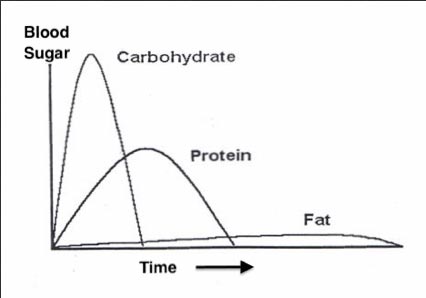
(Diabetes Meal Plans, 2015)
This does not mean cutting out whole fruits and vegetables, however. The carbohydrate load in whole foods is actually very low. This would mean cutting out excess sugars, refined grains, bread, cereals, and other starchy foods. When someone continues a diet high in carbohydrates to spike insulin levels it creates problems when the sole issue to lose weight is thought to reduce calories overall. With insulin levels still high eating lower calories but still lots of carbohydrate it creates a struggle for your body. The high insulin levels will not allow stored energy to be utilized effectively, the body is in storage mode.
When you reduce your calories with high insulin, since your body cannot access your stored energy it has no choice but to lower your metabolism. Your metabolism will slow along with your reduced calorie intake. That metabolism and energy expenditure reduction will not keep you in a caloric deficit; it eventually causes plateaus and weight gain, despite still being in a caloric deficit from what intake was previously. How our body functions is fascinating, but until a balance is achieved the imbalance will always have consequences.
Tackling High Insulin and Insulin Resistance
If we reduce our intake of high carbohydrate meals, we reduce the insulin spike associated with that. Keep in mind for that backup and resistance of insulin to be drained, we need to allow it to do so. If we eat healthier food, avoiding processed meals, even if they are high in fat, and moderate in protein we can keep the metabolism up if we eat enough of those sources and ditch the carbs. To follow the analogy, this will reduce the amount of water we secrete from the faucet when we do eat. This is a great step to reversing type 2 diabetes and burning fat.
Type 2 Diabetes, Genetic or Inherited?
Plenty people speak of type 2 diabetes being genetic, this is non-specific to the real cause. The reason why those that have insulin resistance or are obese give birth to children that end up obese with insulin resistance or pre-diabetes is that insulin resistance is directly manifested in the child from being in the womb, being exposed to the mother’s high insulin levels. (Fung, The Obesity Code. Page 147) It only makes sense, right? If insulin resistance is apparent in the mother, then insulin resistance being built up in the womb would cause the same issue, and even lead to Fetal macromasia, or a fetus being large for gestational age.
Fasting and Insulin
If reducing the amount of insulin secreted when we do eat is effective to help the insulin issue, then flat out letting the pool of insulin drain, and allowing insulin sensitivity return is certainly the most effective way to treat this problem. We can achieve this through what is called intermittent fasting. A better ratio from fasting to feasting directly normalizes insulin levels through time. What insulin resistance was built up through high spikes and often intake of highly refined carbohydrate intake. Essentially this means the worst you can do is eat carbohydrates highly and often. Most snack foods unfortunately are high in carbohydrates, in the world of insulin resistance, type 2 diabetes, and losing weight, 6 small meals a day still will not solve the issue.
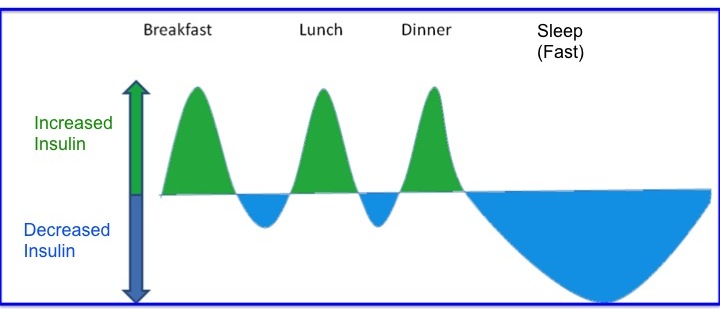
Average 3 Meals A Day
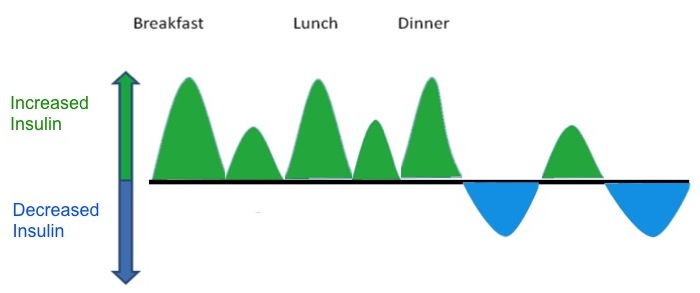
3 Meals a Day, plus snacks between breakfast, lunch, dinner and before bedtime. (Intensive Dietary Management, 2017)
With these findings on the role of insulin this makes meal timing is very important. If we need to burn fat as well as normalize our insulin levels, then not eating or fasting would be the best relief from the insulin resistance. But what about the metabolism drop? What if I told you there was no metabolism drop from skipping meals? What if I told you that metabolism actually slightly increased? It has been shown that fasting actually increases metabolism.
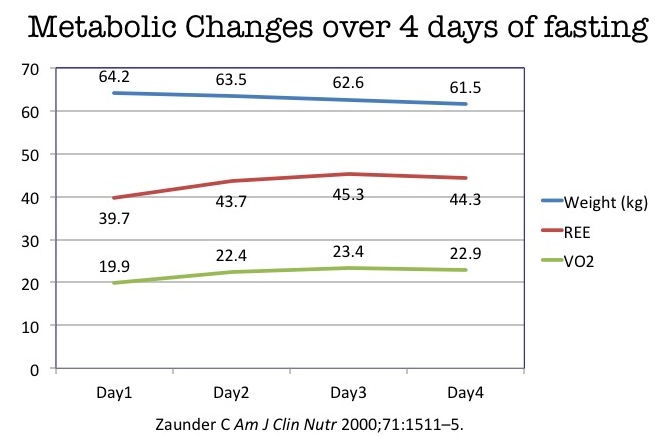
How does this make sense though? Where are we getting our energy from, how will this help type 2 diabetics or anyone that is obese that has insulin resistance? Let’s take a step back and look at the mechanic of fasting, if you’re fasting what is spiking your insulin? …Nothing. If you’re fasting, where are you getting your energy if not food? You’re getting your energy from your fat stores. You’re finally tapping into the reserves your body has saved for a rainy day. But in society today, we don’t have food scarcity like we used to, at least in developed nations. We didn’t evolve to give up in tough times, we evolved to survive and thrive. Tackle our obstacles with even more angst in the tough times. When we fast our bodies release norepinephrine (noradrenaline) this is what causes our metabolic rate to increase with no food intake. (Zauner, C. 2000) It’s a survival mechanism to function at our best, because what we’re previously doing is not allowing in a successful hunt or intake of energy. We need something extra in times of struggle and scarcity.
Muscle loss from fasting? No problem.
All the muscle heads out there must be extremely against fasting because obviously you’re in a catabolic state and not feeding those muscles soon enough, right? Wrong.
Intermittent fasting has made quite the arrival on the bodybuilding and athletic scene, but how?
In a randomized study that lasted 6 months they measured body composition in individuals doing the same workout routine. They compared a standard caloric restriction model with alternate daily fasting. The fasting timeline was around 36 hours in the alternate daily fasting group. At the 32nd week there was 1.6kg of lean tissue lost due to caloric restriction but frequent meals. In the alternate day fasting the loss was only 1.2kg of lean tissue. This shows that with caloric restriction achieved through alternate day fasting preserves lean mass significantly more than a consistent small meals to achieve a caloric deficit. What is most astounding in this study though is the lean tissue percentage, which is fat mass change up against lean mass remaining. The lean tissue percentage in the calorie restriction group was a 0.5% increase of lean mass in proportion to fat loss. The alternate day fasting group had an astounding 2.2% increase of lean tissue. The alternate day fasting was demonstrated to be 4 times better at preserving lean tissue amongst body fat proportion lost. (Catenacci, 2016)
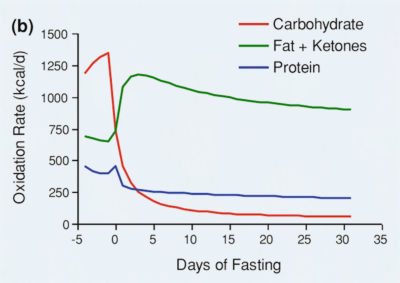
How is this possible though? What on earth even could allow this to be so effective? The answer, elevated levels of human growth hormone (hGH). Not only to preserve lean mass, but to set the stage for more muscle growth when refed as well.
(Diet Doctor, 2017)
The reality is that we don’t burn our muscle protein over our fat stores. That just wouldn’t make sense evolutionarily. If it came to it why would we break down functional protein for energy when we have the fat stores to supply energy from fatty acids and glucose from the glycerol backbone? What makes sense is the fact that we build muscle, we don’t burn it.
Through strategic fasting and a diet of unprocessed foods unrestricting dietary fat, you can deal with the real problem. Insulin desensitization/resistance, this alleviates the issue of type 2 diabetes and everything that comes with it. This is a strategy that I’ve adopted over a year ago, to deal with the insulin resistance that I had built up. Type 2 diabetes is prevalent so much today it’s not a huge statement to say that you have family members that deal with it. But through leading as an example, and conversations sparked from it, I have been sharing these strategies with family and friends that have benefitted greatly just as I had. It surely is not a strategy that is shared by the department of agriculture or by food companies because there is no profit motive. But as the studies come out the taboo of fasting and challenged status-quo of high fat diets will chip away at the myths that have been spread and labeled as common sense. Breakfast and eating many meals a day might not be the most important for your health, but it is certainly an important metric for food companies that mostly sell long-shelf life highly processed carbohydrates.
American Diabetes Month®. (2017, March 9). Retrieved April 11, 2017, from http://www.diabetes.org/in-my-community/american-diabetes-month/?loc=imc-superfooter
Bhutani, S., M. C. Klempel, R. A. Berger, and K. A. Varady. "Improvements in coronary heart disease risk indicators by alternate-day fasting involve adipose tissue modulations." Obesity (Silver Spring, Md.). U.S. National Library of Medicine, Nov. 2010. Web. 20 Apr. 2017.
Catenacci, V. A., Z. Pan, D. Ostendorf, S. Brannon, W. S. Gozansky, M. P. Mattson, B. Martin, P. S. MacLean, E. L. Melanson, and W. Troy. "A randomized pilot study comparing zero-calorie alternate-day fasting to daily caloric restriction in adults with obesity." Obesity (Silver Spring, Md.). U.S. National Library of Medicine, Sept. 2016. Web. 21 Apr. 2017.
https://www.ncbi.nlm.nih.gov/pubmed/27569118
Dening, Jedha, Diabetes Meal Plans. N.p., 18 Nov. 2015. Web. 20 Apr. 2017.
https://diabetesmealplans.com/6576/how-to-lower-blood-sugar-naturally-through-diet/
"Fasting and Muscle Mass." Diet Doctor. N.p., 02 Feb. 2017. Web. 21 Apr. 2017.
https://www.dietdoctor.com/fasting-muscle-mass
Fung, Jason. "How Insulin Works." Intensive Dietary Management. N.p., 10 Jan. 2015. Web. 20 Apr. 2017. https://intensivedietarymanagement.com/insulin-works-hormonal-obesity-vii/
Fung, Jason. The obesity code: unlocking the secrets of weight loss. Vancouver: Greystone , 2016. Print.
Hallberg, Sarah. YouTube. TEDxPurdueU, 04 May 2015. Web. 20 Apr. 2017.
https://www.youtube.com/watch?v=da1vvigy5tQ
Zauner, C. "Resting energy expenditure in short-term starvation is increased as a result of an increase in serum norepinephrine." PubMed.gov (2000): n. pag. Web.
https://www.ncbi.nlm.nih.gov/pubmed/10837292